
Cooperatives: A key pillar in new rural development
In recent years, the collective economic sector and cooperatives in the province have expanded both in scale and performance, affirming their key role in economic growth, new rural development, and improving livelihoods.
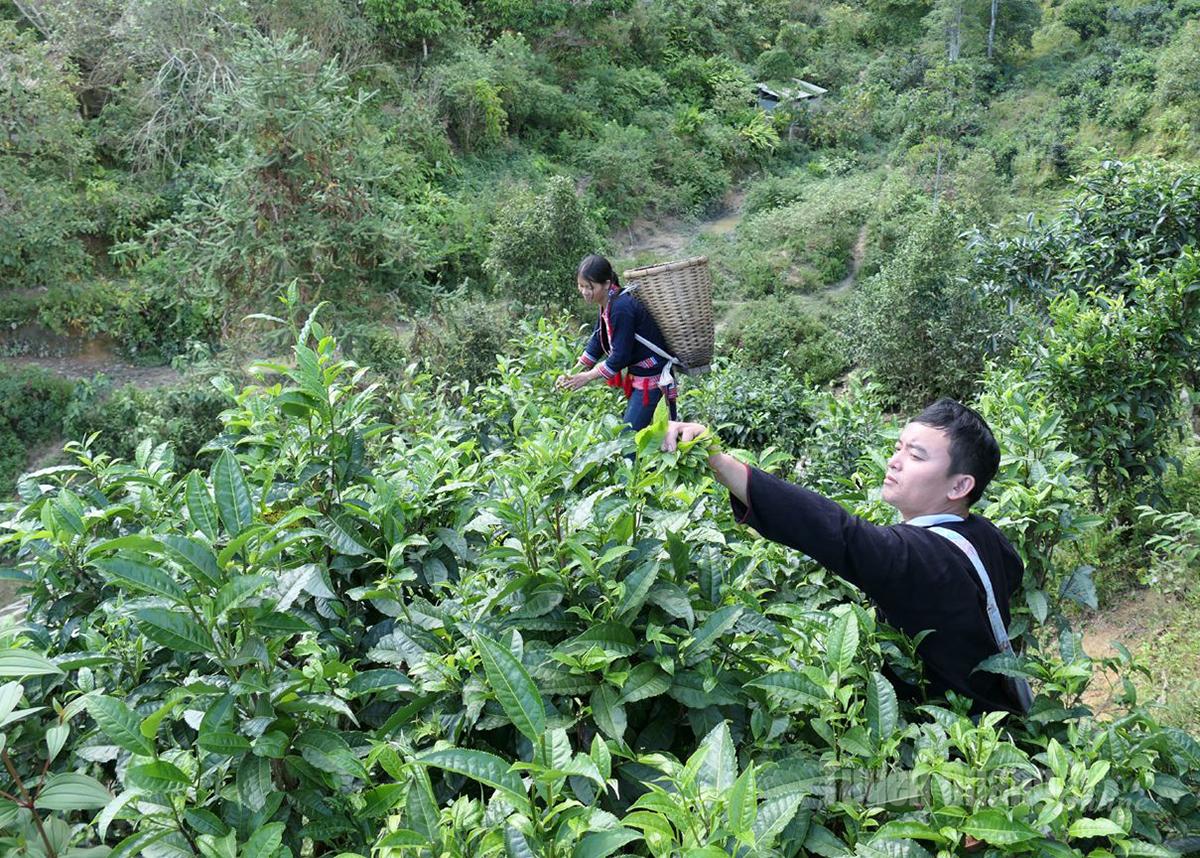 |
| People in Thong Nguyen Commune harvest Shan Tuyet tea to supply to Phin Ho Cooperative. |
To date, the province has 1,547 active cooperatives with more than 24,000 members and a total registered capital of over VND 4.479 trillion. Among them are 1,043 agricultural–forestry cooperatives and 504 non-agricultural ones, creating stable jobs for more than 13,000 workers with an average income of VND 67.8 million per person per year. The cooperative economy has become an important “pillar” supporting agricultural and rural development.
Cooperatives have diversified based on local strengths, resulting in multiple successful production models. Notable examples include Son Tra Cooperative with four 4-star OCOP products; Minh Tam Cooperative linking over 1,200 households to cultivate 170 hectares of cucumbers; Su Anh Cooperative maintaining ISO-standard tea production; Sang Nhung Cooperative developing VietGAHP pig farming and distributing nearly 250 OCOP specialty products; and Tien Thanh Cooperative producing Tuyen Quang dried buffalo meat. Sang Nhung Cooperative, in particular, has maintained steady growth during 2020–2025, building its 4-star OCOP herbal pork brand, investing in digital traceability, online farming records, digital sales management, and expanding its market reach. The cooperative has also partnered with South Korea’s COVEKA to build a wastewater treatment and organic fertilizer plant with a capacity of 10,000 tons per year, creating jobs for 40 workers and contributing to green, circular economic development.
As of October 2025, the province has 509 OCOP products rated 3 stars or higher, including two 5-star products, highlighting the contribution of cooperatives to agricultural quality improvement. However, the sector still faces challenges in scale, capital, management, land access, and technology. The Provincial Cooperative Alliance is enhancing policy outreach, management training, value-chain linkages, and support mechanisms to improve access to resources. In the coming years, the province aims to establish 60 new cooperative groups and 70 cooperatives, raise average annual revenue per cooperative to VND 1.88 billion, and increase worker income to VND 78.5 million per year. It also plans to develop one to two exemplary modern cooperatives to serve as core models for wider replication.
With strong support from authorities and the dynamism of local cooperatives, the collective economic sector in Tuyen Quang is expected to continue expanding, contributing significantly to socio-economic growth and improving rural living standards.
Trang Tam


READER COMMENTS